Blog
Breaking the Coccidiosis Cycle: Natural Defence with COCCIVIV

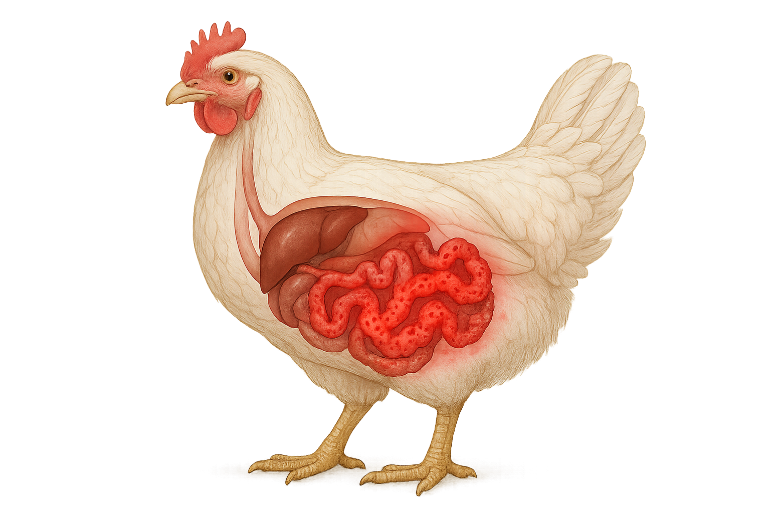
Coccidiosis is one of the most common and economically damaging diseases in poultry. It targets the intestines, leading to poor growth, diarrhea, and—in severe cases—high mortality. If not managed early, coccidiosis can cause significant production losses in both broilers and layers.
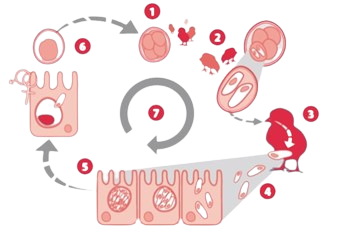
The disease is caused by protozoan parasites of the genus Eimeria, which invade and multiply within the epithelial cells of the intestinal lining. These parasites are commonly found in the environment, particularly in poultry litter, and birds become infected when they ingest food or water contaminated with oocysts (the infective stage of the parasite).
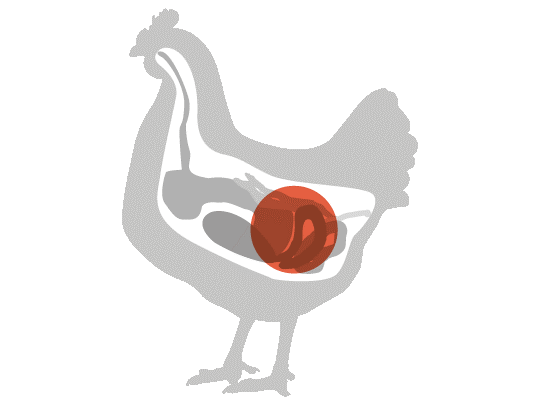
There are several Eimeria species that affect chickens, each targeting a different part of the gut. The most common and harmful include:
- Eimeria acervulina– affects the upper intestine (mainly the duodenum); commonly causes mild to moderate diarrhea and reduced growth
- Eimeria maxima– damages the mid-gut (jejunum); impairs nutrient absorption and weight gain
- Eimeria tenella– targets the ceca, causing bloody diarrhea and high mortality, and is the most prevalent and pathogenic species
The disease spreads rapidly through droppings. Oocysts excreted in feces contaminate litter, feeders, drinkers, and even equipment or footwear. Warm, moist, and unclean conditions allow these oocysts to survive and develop. Birds become infected when they peck at contaminated surfaces and ingest these oocysts.
COCCIVIV, developed by VIVANTIS INTERNATIONAL PVT. LTD., is an advanced blend of anti-coccidial phytochemical bioactives. This formulation supports natural coccidiosis control in poultry by targeting the parasite through multiple mechanisms. These botanicals contribute to COCCIVIV’s multi-targeted approach against coccidiosis by disrupting the life cycle of Eimeria parasites, enhancing gut immunity, reducing intestinal inflammation, and supporting a balanced microbiota.
COCCIVIV represents a modern, residue-free approach aligned with the growing demand for sustainable and safe poultry production. However, as with all phytogenic products, best results are achieved when it is used as part of an overall integrated program—alongside good litter management, biosecurity, and where appropriate, vaccination.